
Start a Local Sunrise Walking Group: A Step-by-Step Community Guide
The best company for a sunrise walk is someone who also said yes to a 6am alarm. That is the whole idea behind a local walking group: a handful of people, one route, one fixed time, and a shared reason to get out of the door before the day fills up. It sounds like a project. It isn't. Most groups that last start with four or five people and a walk that takes under an hour.
Here is how to put one together without committees, funding bids or a website you will never update.
Choose the route first
Route is the decision that makes or breaks everything else. Before you invite anyone, walk three or four possible loops yourself at the time you plan to run them. Not at lunchtime, not on a sunny Saturday — at 6.15am on a Tuesday, in the light you will actually have.
Look for:
- A circular route of three to five kilometres, starting and finishing in the same place.
- A start point people can find and park near — a car park, a station forecourt, a village hall.
- Paved or firm paths. Stiles, muddy fields and unlit lanes are fine in July and miserable in January.
- At least one shortcut, so someone can turn back early without needing an escort.
- A finish near a café, a bench or a bus stop, so people can leave easily afterwards.
Walk the route in the worst conditions you would realistically go out in. If it is unpleasant then, pick another. Note anything worth mentioning at the start: a road crossing with no pavement, a gate that sticks, a stretch that floods.
Set the details before you advertise
Ambiguity kills small groups. "Tuesday mornings" means nothing when you are standing alone in a car park wondering whether anyone else is coming. Decide the day, the start time, the meeting point, the distance, the pace and the expected finish. Work backwards from people's commutes: a 6.15am start, forty-five minutes of walking, home by 7.10am.
Write it down in one place — a WhatsApp group, a mailing list, a Facebook event — and use the same channel for cancellations. A simple weather rule works well: we walk in rain, we cancel for ice, and any cancellation is posted by 5am.
Two jobs need names attached. Someone walks at the back so nobody is left behind, and someone carries a phone, a small first aid kit and a spare torch in winter. Ask for volunteers rather than assigning roles.
Make safety and comfort routine
You do not need a formal risk assessment for a walk around the park, but a few habits prevent most problems.
- Share the route and your expected return time with someone at home.
- Wear something visible in low light. Reflective bands, a hi-vis tabard, a torch — on unlit lanes, assume drivers cannot see you.
- Walk no faster than conversation pace. The moment people start being dropped at the back, they stop coming.
- Carry water and a phone, and know where the nearest public toilet is, even if it is shut at that hour.
- Agree a dogs-and-children policy in advance and state it in the invitation. "Well-behaved dogs on leads welcome" is clearer than saying nothing.
If you have a heart condition, are pregnant, are managing a long-term illness or are returning to exercise after a long break, have a word with your GP before committing to a regular early start. On the walk, stop if you feel dizzy, breathless or unwell, and treat chest pain or sudden severe breathlessness as an emergency. Nobody should ever feel obliged to push through.
Invite people in plain language
Start with people you already know — neighbours, colleagues, the parents at the school gate, the friend who keeps saying they want to walk more. Four people is a group. You do not need thirty.
Then widen it:
- Noticeboards in the village hall, library, community centre and coffee shop.
- Local Facebook groups, Nextdoor and the parish newsletter.
- The parkrun crowd, the u3a, a workplace intranet or staff room.
Whatever the channel, include the day, time, meeting point, distance, approximate duration, pace and whether booking is needed. "No need to book, just turn up" removes the biggest barrier there is. Add a map pin or a photo of the meeting point; an address on its own sends people to the wrong end of the car park.
The first walk
- Arrive ten minutes early and stand somewhere obvious.
- Wait five minutes past the stated time.
- Introduce people to each other before you set off. Names first, walking second.
- Walk at the back on the first outing, so you can talk to newcomers and check nobody is struggling.
- Pause somewhere with a view. The sunrise is the point.
- Finish with a clear ask: same time next week?
Keep it alive through the dark mornings
Groups rarely fade in June. They fade in November, when the appeal of a 6am walk collides with a warm kitchen. Plan for it. Shorten the route, keep the pace gentle, and make lighting non-negotiable. A flask at the end helps more than any motivational speech.
Share the leading, too. If one person is always the organiser, one holiday or one illness ends the group. Two or three people who can each lead a walk is the best insurance you can build.
Change the route once a month so regulars do not get bored, and mark the year with a few dates: the summer solstice, the first frost, the morning the clocks change. Sunrise moves, and so should the interest.
Then leave it alone. Do not chase numbers, do not form a committee, and do not worry if only three people turn up. Three people at sunrise is a perfectly good Tuesday.
Start with one walk
Pick a route. Walk it yourself at the hour you intend to share it. Post the details in one place with a time, a place and a distance. Turn up.
That is the entire method. The first sunrise you share with someone else is the one that makes it real, and next Tuesday is as good a date as any.
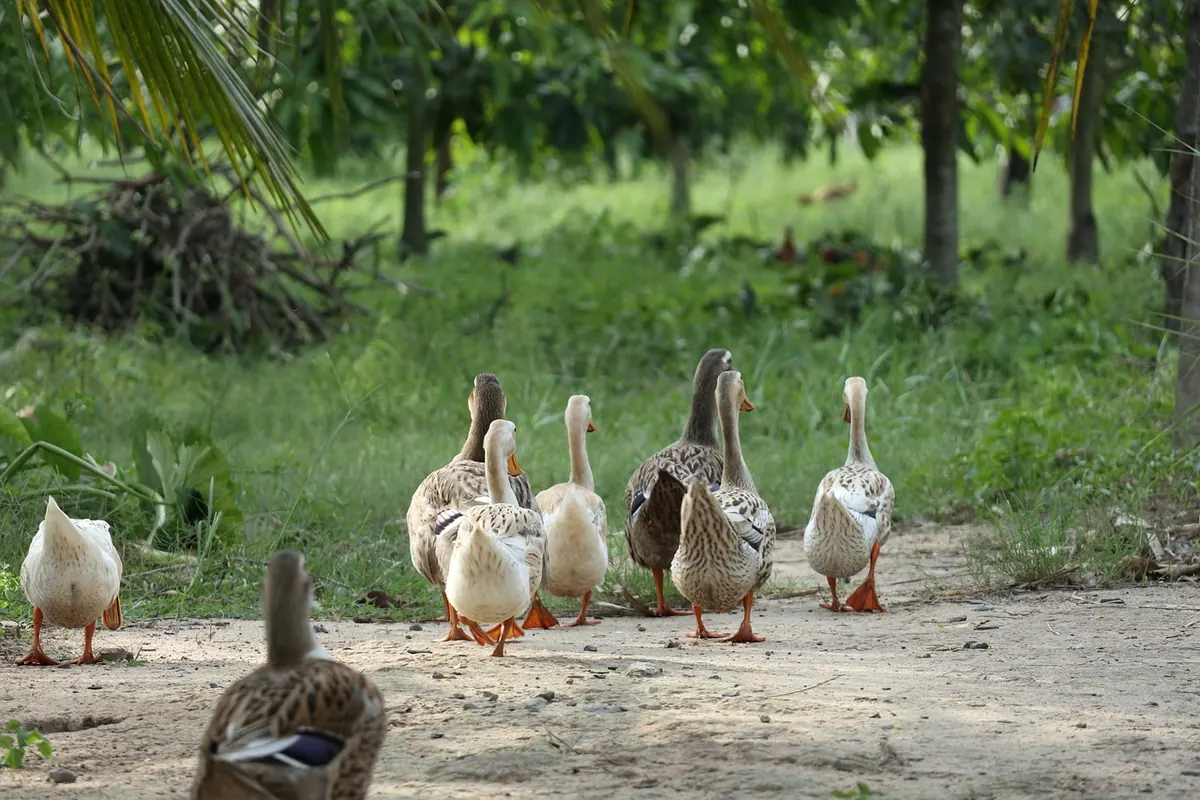
Photo: GrassNguyen / Pixabay