


The Night-Before Checklist for Easier Early Mornings
The alarm goes off at six. You meant to get up, make coffee and use the quiet hour properly. Instead you hit snooze twice, hunt for a clean shirt and leave the house without breakfast. None of that is a failure of willpower. It is a failure of the evening before.
Early rising is rarely won at dawn. It is won between nine and eleven the previous night, in a handful of small decisions that take about fifteen minutes in total. Run through them once and tomorrow gets easier. Run through them for a fortnight and they stop feeling like effort at all.
Clothes: remove the first decision of the day
Choosing what to wear at 6.20am, in half-light, with one eye open, is a decision you are not equipped to make. Make it at 9pm instead, when you are warm, dressed and capable of checking the weather forecast.
Lay out the whole thing, not just the trousers. Socks, underwear, belt, jumper, and the shoes that go with them. Hang it on a hook or drape it over a chair, somewhere you will see it the moment you get up. If something needs ironing, iron it now or put it in the wash and choose something else. Discovering a creased shirt at ten past seven is the sort of small snag that derails a whole morning.
Two extras worth borrowing from people who leave early:
- If you swim, run or go to the gym before work, have the bag packed and by the front door, with your kit inside it rather than in a pile beside it.
- If you work from home, laid-out clothes still matter. A clean jumper and trousers rather than the pyjamas you slept in changes how the first hour feels.
Breakfast and the kitchen reset
Decide tonight what you are eating, then set up the kitchen so it takes three minutes rather than fifteen. A sink full of last night's pans is the fastest way to send yourself out of the door with nothing but a mug of tea.
Pick one of these and commit to it:
- Overnight oats or chia pudding made in a jar and put in the fridge before bed. Grab a spoon in the morning and you are done.
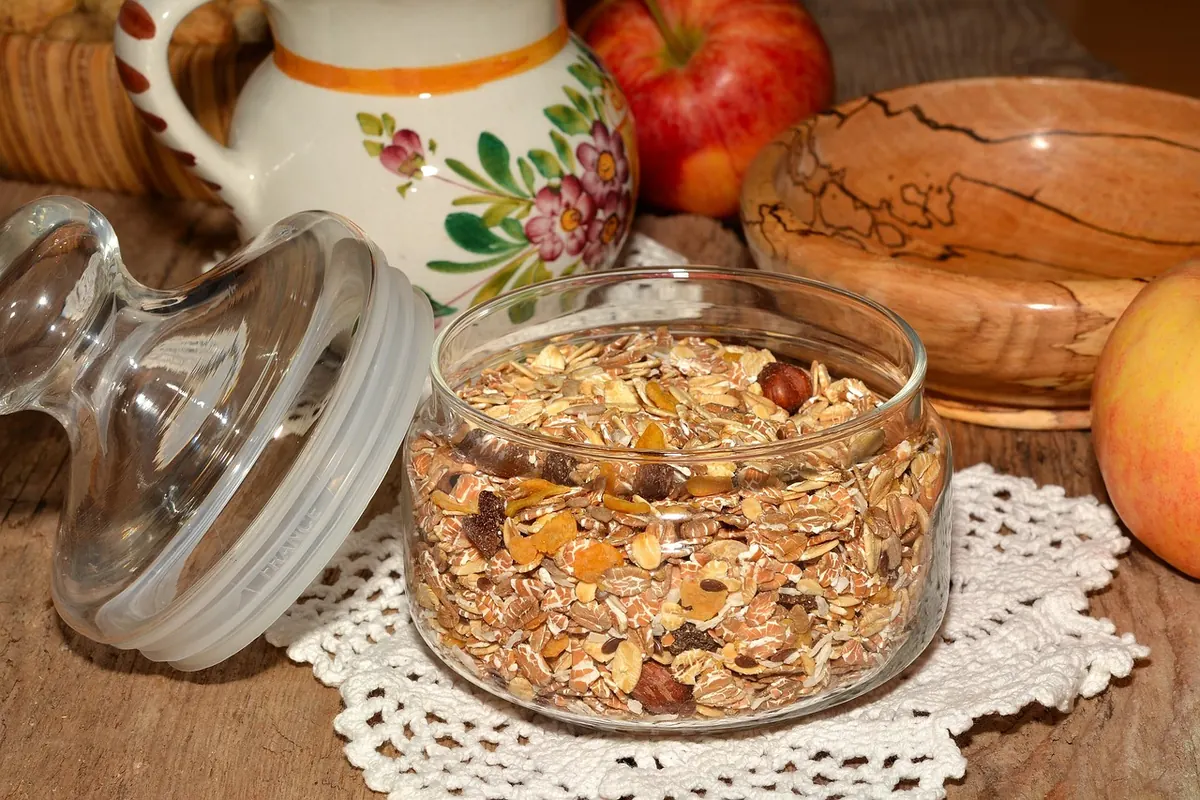
- Porridge with the oats, bowl, spoon and a pinch of salt already out on the counter. Kettle or microwave, two minutes, eaten.
- Toast and something on it — bread in the toaster's reach, butter out, plate ready.
- Breakfast on the move. If you genuinely cannot eat at 6.30, make something portable the night before: a filled roll, a banana and a handful of nuts, a flask of coffee.
While you are there, sort out the small things. Empty the dishwasher or wash the pans. Put the bin out if it is collection day. Fill the kettle. Set out your mug. These take two minutes now and save a bad-tempered five minutes later.
Screens: set a finish line, not a ban
Telling yourself you will "use your phone less" achieves nothing. Pick a time — 10pm is a common one — and treat it as a finish line. Then make it easy to keep by putting the phone on charge somewhere that is not your bedroom, or at least not within arm's reach of the pillow.
The scrolling itself is usually the problem, more than the light from the screen. Ten minutes of news, messages and half-watched videos leaves your head busier than it was before you started. If you want something to do instead, choose it now rather than at 10pm when you are tired and uninspired: a paperback, a notebook, the radio, a podcast with a sleep timer, or simply a proper conversation.
The last twenty minutes
Sleep arrives more easily when it follows the same sequence each night. Yours does not need to be elaborate.
Signal to your body that the day is over
- Turn off the main light and use a lamp or two instead.
- Drop the thermostat a degree or open a window briefly — most people sleep better in a slightly cooler room.
- Do the same short routine: mug to the sink, teeth brushed, face washed, clothes laid out, alarm checked, light off.
If your mind starts working
Keep a notepad by the bed. Anything that surfaces — the email you forgot, the thing you must take to work, the call you need to make — goes on paper. It is not solved, but it is parked, and that is usually enough to stop it circling.
If you are wide awake, do not lie there getting cross about it. Read something undemanding under a dim light until you feel drowsy, then try again. If poor sleep is a regular feature rather than an occasional one, it is worth speaking to your GP rather than pushing through on willpower alone.
Set the alarm so it helps rather than ambushes
A surprising number of difficult mornings begin with an alarm that was set in a hurry. Before you turn the light off, check four things.
- The time is realistic. If you have never once got up at 5.30, do not start tomorrow. Move your wake time earlier in fifteen-minute steps over a week or two.
- It is across the room. If it is on the bedside table, you will silence it without waking up properly.
- There is only one. A backup alarm you intend to snooze is not a backup, it is a second chance to stay in bed.
- It is charged and set. If your phone is your alarm and it lives across the room, plug it in there. No flat battery, no midnight reach for the screen.
Finally, decide what you will do in the first sixty seconds of the morning. Kettle on, curtains open, glass of water from the bedside. Give yourself an instruction, not a vague hope.
The night-before checklist
Keep this somewhere you will see it — inside a cupboard door, or as a note on your phone that you check at 9pm rather than midnight.
- Tomorrow's clothes laid out, shoes included
- Bag or gym kit packed by the door
- Breakfast decided, and as much of it prepared as possible
- Kitchen surfaces clear, dishwasher dealt with
- Phone charging away from the bed, screen finish line agreed
- Notepad by the bed for tomorrow's worries and tasks
- Alarm set, checked, and out of arm's reach
- First move of the morning chosen
You will not do all of it every night, and you do not need to. Two or three of these done well will change how a morning feels; the whole list, done in fifteen minutes, will change how a week feels. Start with the clothes and the breakfast, because those are the two that cost you the most time when they are left undone. The rest can follow.
Photo: mylns65hoasphn / Pixabay